driving

The Parking Lot: The First Part of a Security Incident

The International Protective Security Board (IPSB) is an independent, nonprofit entity devoted to promoting the protection industry’s interests by focusing on protective security trends, best practices, and professional development.

[ Read the SemperVerus article, Protection Book Review: Just 2 Seconds ]

With its Latin motto of “Vigilate” (keep watch or stay alert), “Semper Discentes” (always learning), and “Et Honorem” (and honor), it encompasses all public-facing sectors requiring security attention, including faith-based organizations.

[ Bookmark the SemperVerus CHURCH SECURITY INTELLIGENCE CLIPBOARD ]

Its semiannual publication is The Close Protection & Security Journal. Volume 2, Issue 1 includes the article, “The Parking Lot: The First Part of a Security Incident” (PDF) by Greg Williams and Brian Marren of Arcadia Cognerati, the principles of which can be applicable for church security teams.

[ Read the SemperVerus article, The 5 Lines of Defense in Church Security, Beginning Outside ]

It begins, “Before a school shooter can start killing, before a bank robber can pass a note to a teller, and before someone can rob a gas station, they have to pass through a parking lot. In the parking lot, the element of time and distance between the perpetrator and their victim already exists. You need to learn to exploit it to yield opportunity.”

Continue reading »

Self-Defense and Church Security Lessons by John Correia Reviewing an Attempted Carjacking

Active Self Protection‘s mission is to help others develop the Attitude, Skills, and Plan to better protect themselves and their loved ones from harm. Its founder and owner, John Correia, posts online real defensive encounters that are recorded on camera and performs after-action analyses that identify self-defense lessons learned from them.

[ Read the SemperVerus article, Active Self Protection Self-Defense Checklists and Acrostics ]

The following video is of an attempted carjacking and the lessons that can be applied to your own self-defense or church security volunteer team best practices:

Continue reading »

Active Self Protection Self-Defense Checklists and Acrostics

John Correia is the founder of Active Self Protection, teaching people to develop the attitude, skills, and plan (ASP) to defend themselves and their families from harm.

[ Read the SemperVerus article, Church Security Armament Recommendations By Tom Givens, John Correia, and 6 Other Professionals ]

John is a nationally-recognized subject matter expert in private citizen defensive encounters and law enforcement use of force, a master firearms instructor, martial artist, court-admitted expert witness, teacher of teachers, and former pastor. He reviews thousands of violent incident videos as true-life self-defense teaching lessons on his Main and his Extra YouTube channels.

[ Read the SemperVerus article, Self-Defense and Church Security Lessons by John Correia Reviewing an Attempted Carjacking ]

The following is a collection of some of the acrostics and checklists John has created to assist in remembering self-defense techniques and mindset.

[ Read the SemperVerus article, Interview With John Correia of Active Self Protection About Church Security Teams ]

•   Vehicles are transitional spaces where threatening incidents can easily happen. Follow this LET’SS GO checklist IN NUMERICAL ORDER to quickly remove yourself from vulnerability:

LET’SS GO

  1. L ock your doors as soon as you get into your car.
  2. E ngine on.
  3. T ransmission in gear.
  4. S seatbelt buckled.
  5. S can your surroundings.
  6. G et organized.
  7. O n your way.
Continue reading »

Principles of Defensive Driving from the Michigan State Police

The Michigan State Police Precision Driving Unit provides regularly scheduled precision driving programs to law enforcement personnel from throughout the United States and Canada. These include courses in basic driving, instructor development, pursuit schools, and recruit driver training. Defensive driving lectures are offered for criminal justice agencies as well as private sector organizations. The Michigan State Police Precision Driving Unit is also internationally recognized for the testing of pursuit-rated patrol cars through the Police Vehicle Evaluation and Purchasing Program.

[ Read the SemperVerus article, Self-Defense Tactical Driving Tips ]

One of its curricula is Civilian Defensive Driving, a free PDF that teaches principles of safe driving.

[ Read the SemperVerus article, Protect Yourself from a Carjacking ]

Among its lessons are the following:

Continue reading »

Situational Awareness: 14 Ways to Walk Like You Drive

How to Improve Your Situational Awareness.

You’ve heard the admonition to “Drive Defensively.” It means to always be ready for the possibility of encountering any dangerous occurrence while driving your vehicle. Be prepared. Think ahead. Anticipate hazards.

[ Read the SemperVerus article, Self-Defense Tactical Driving Tips ]

The scene doesn’t even have to be treacherous. For example, when you’re about to turn a street corner, it merely involves thinking through several sets in succession in what should be an automatic reflex:

  1. Most of your braking should be done in a straight line, before the corner.
  2. Trail off the brake smoothly as you turn in and enter the corner.
  3. Look through the corner for the exit.
  4. Apply throttle as you straighten the wheel back out at the exit.
  5. Choose your speed and driving lines based on the next corner, not just the one you’re in.*

Take the lessons you’ve learned in defensive driving and apply them as situational awareness techniques to your walking environment. Blogger Chris Bird says, “The goal is to be able to use your awareness to detect, assess, avoid, evade, counter, and prevail in the encounter.” These precautions may seem overwhelming at first in your everyday life, but remember, they’ve become second-nature to you when driving and they can be the same when walking.

[ Read SemperVerus articles on the subject of SITUATIONAL AWARENESS ]
Prepare and Know Your Route
Just as you type your destination into an online map to determine your most efficient trip from point A to point B, think through the avenues, streets, sidewalks, and paths, as well as time of day and other factors before you set out walking to avoid sketchy parts of town and to have the confidence of knowing where you’re going and how to get there.

Continue reading »

Protect Yourself from a Carjacking

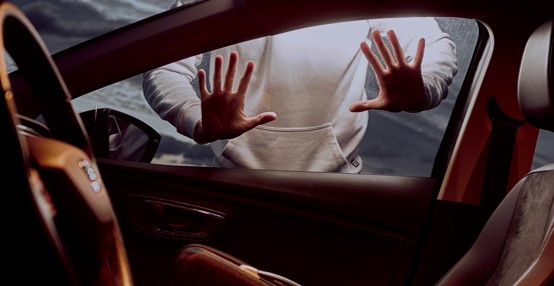
Your wallet isn’t the only item criminals want to steal. Your car appeals to them too. Be prepared.

  • Read news articles about carjackings and mentally imagine what you would do in each situation
  • More than one person or a group generally commit these violent carjacking thefts.
  • Know your route. Avoid driving in unfamiliar neighborhoods.
  • Keep alert while your vehicle is moving and while it is idling
  • Carjacking most often occurs in transitional spaces such as parking lots and gas stations.

[ Read the SemperVerus article, Active Self Protection Self-Defense Checklists and Acrostics ]

[ Read the SemperVerus article, Self-Defense Tactical Driving Tips ]

  • Fuel your vehicle only during the day at gas stations in well traveled areas. Scan the gas station for suspicious behavior or loitering before you select a pump. While fueling, keep your car locked and keep scanning your surroundings to be prepared to take action (e.g., use the gas nozzle as a jet stream) should a vehicle or person approach you in a threatening manner.
Continue reading »

Self-Defense Tactical Driving Tips

Image of two hands on a car steering wheelSince the early 1960s the phrase “Drive Defensively” has been taught in driver education courses across America. It means the skill to drive a vehicle safely despite any conditions you encounter and the actions of others. In a typical defensive driving course, students learn crucial crash prevention techniques that include:

  • Scanning the roadway ahead and adapting accordingly to your surroundings
  • Expecting the unexpected
  • Being alert and distraction free
  • Employing the two-second rule for following distances
  • Knowing your vehicle’s stopping distance
  • Being aware of reaction distance
  • Looking through a turn to know what you’ll encounter
  • Preparing for environment hazards and vehicle emergencies
  • Driving with the commitment to be the safest driver on the road

[ Read the SemperVerus article, A Simple Chart for Situational Awareness ]

Self-defense tactical driving takes the concept further, putting a motor behind the everyday proficiency of situational awareness. As always, distance is your self-defense friend. The greater the distance from a threat, the more time you have to avoid or prepare for it. Here are a few practical ways to defend yourself in your vehicle:

Continue reading »

Defending Yourself Against Mobs and Riots

What would your immediate reactions be if you found yourself suddenly surrounded by a large crowd of people who are disorderly, loud, angry, and intent on causing trouble and violence? Mobs and riots happen; sometimes with planning and sometimes without warning. As SemperVerus believes, it’s best to be ready in such situations.

What follows is a bullet point compilation of key ideas taken from several self-defense sources. Click the source links to read the articles in full.

[ Read the SemperVerus article, Why Use and How to Choose Pepper Spray ]

■   Active Response Training: Surviving the Mob

  • Be aware of your surroundings and have a plan to stay one step ahead of possible mob formation.
  • Resist the urge to stand around and watch the mob’s display.
  • Always have an evacuation plan for every location you visit.
  • Make sure your children know how to escape crowd violence.
  • Wear shoes (and other clothing) that facilitate the ability to run if necessary.
  • When attending any large public event, you and all of your family members should establish at least two emergency meeting locations: one within the event perimeter and one outside the event.
  • Equip your children with spare car keys, even if they can’t drive. A natural meeting place is the family car and you’ll want your children to be able to seek shelter inside the car if you haven’t yet arrived.
  • Consider carrying and using small impact weapons or pepper spray (OC) for most threats.

Read many more excellent articles on how to survive a mob written by retired police officer Greg Ellifritz of Active Response Training.

Continue reading »

Stranded in Your Car This Winter? Here’s How to Survive

On the USCCA blog, Frank Jastrzembski writes: The US Department of Transportation’s Federal Highway Administration reported that more than 70% of the nation’s roads are located in snowy regions, which receive more than 5 inches of snowfall on average annually. Nearly 70% of the US population lives in this area.

Having a winter survival kit in your vehicle is an essential part of winter travel. Your kit should include the following items:

Continue reading »

Verse of the Day

Loading…

Powered by BibleGateway.com

Search SemperVerus

Lookup a word or passage in the Bible


BibleGateway.com
Include this form on your page
Scroll to Top

Subscribe to SemperVerus®

Get new posts delivered to your inbox.